

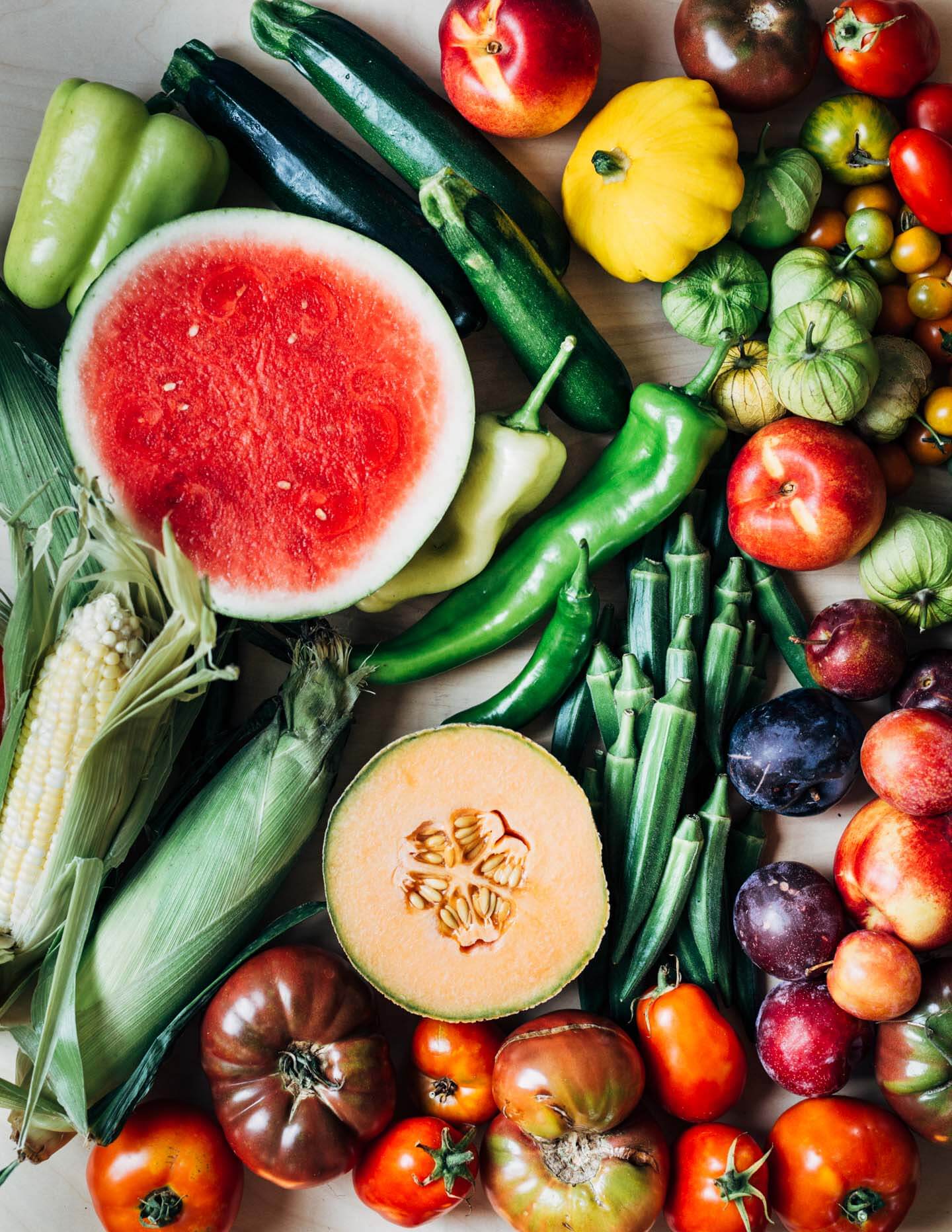
By late summer, farmers markets and produce aisles are at their most colorful. August through early September brings an abundance of tomatoes, berries, peaches, plums, cucumbers, peppers, zucchini, eggplant, melons, okra, and fresh herbs. Although the exact timing varies by region, this stretch of the season offers one of the easiest opportunities to bring more plant variety into your diet.
But why should we care about variety? Plant variety and phytonutrient diversity is a cornerstone of good gut health. Different species are equipped to break down different types of fiber and plant compounds, so the variety of plants you eat matters alongside, of course, your total fiber intake.
When gut bacteria ferment certain fibers, they produce short-chain fatty acids such as butyrate. These compounds help nourish the cells lining the colon and support the intestinal barrier. Other fibers hold water or add bulk to stool, helping support comfortable and regular bowel movements. Polyphenols also interact with the microbiome. Gut bacteria help transform these colorful plant compounds into metabolites the body can use, while the polyphenols themselves may influence which microbes are able to thrive. Water-rich produce such as cucumbers, tomatoes, zucchini, and melons also contributes fluid alongside fiber and micronutrients.
In the American Gut Project, people who reported eating more than 30 different plant foods per week had greater microbial diversity than those eating 10 or fewer, though this is not to say that 30 should not be treated as a magic number or a requirement for good gut health. The more useful takeaway is that expanding beyond the same few fruits and vegetables you normally eat may provide the gut with a broader range of fibers and plant compounds.1
Eating seasonally allows us to enjoy foods when they are especially flavorful and abundant, while naturally rotating a wider variety of plants throughout the year. Each season brings its own mix of produce and potential health benefits. Here is what some of late summer’s most popular fruits and vegetables can offer your gut, along with practical ways to incorporate them into your diet.
BERRIES: FIBER AND COLORFUL POLYPHENOLS
Blueberries, blackberries, strawberries, and raspberries pack a surprising amount of gut health benefits into a small serving. All berries provide fiber from their skins, flesh, and seeds, with blackberries and raspberries offering particularly fiber-rich choices. This fiber helps add bulk to stool, support regular bowel movements, and also provides fuel for beneficial gut bacteria.
Berries are also known for being rich in polyphenols, particularly anthocyanins, which are responsible for their deep blue, purple, and red colors. Many of these compounds are not fully absorbed in the small intestine and reach the colon where gut microbes transform them into smaller compounds that may support the intestinal barrier, help regulate inflammation, and influence the overall gut environment. In turn, berry polyphenols and their metabolites may help shape the microbial environment, although researchers are still working to understand how these interactions translate into specific health benefits.2
Practical ways to incorporate late-summer berries:
- Combine two or three varieties with Greek yogurt, chia pudding, or overnight oats
- Toss them into a salad with greens, nuts, and goat cheese.
- Make a paleo berry cobbler
- Freeze ripe berries to use in smoothies after the season ends.
STONE FRUITS: FIBER AND SUPPORT FOR REGULARITY
Peaches, nectarines, and plums offer fiber, polyphenols, and plenty of late-summer flavor. Eating the skin, when tolerated, provides additional fiber that can help add bulk to stool and support regular bowel movements. Their polyphenols also interact with gut microbes, adding to the variety of plant compounds available to the microbiome.
Plums may be particularly helpful for regularity because they contain both fiber and sorbitol, a naturally occurring sugar alcohol that draws water into the intestines and can help soften stool. Prunes are dried plums, so they provide these compounds in a more concentrated form and have stronger research supporting their use for constipation. Fresh plums may offer gentler support as part of an overall fiber-rich diet.3
On the other hand, sorbitol may cause digestive symptoms for some people. Those with IBS or FODMAP sensitivities may experience gas, bloating, or changes in bowel movements after eating larger servings of peaches, nectarines, or plums.4 Portion size and individual tolerance matter when it comes to stone fruit.
Practical ways to enjoy late-summer stone fruit:
- Pair a peach or nectarine with a handful of nuts or seeds for a balanced snack.
- Grill halved peaches and serve them alongside vanilla ice cream for dessert.
- Layer sliced plums onto ricotta toast with a drizzle of honey.
- Make a fresh plum salsa with cucumber, red onion, basil, and lime to serve with grilled fish or chicken.
TOMATOES, PEPPERS, AND EGGPLANT: COLORFUL COMPOUNDS FOR THE GUT
Tomatoes, bell peppers, and eggplant bring more than color to the late-summer table. They provide fiber, an assortment of polyphenols, but also carotenoids, including lycopene in tomatoes and anthocyanins in purple eggplant skin. Bell peppers are also particularly rich in vitamin C (which is not only a vitamin but also acts as an antioxidant).
Carotenoids are plant pigments responsible for many of the red, orange, and yellow colors found in produce. They participate in antioxidant activity and cell signaling, immune function, and healthy tissue development. Lycopene is a specific carotenoid that gives tomatoes their red color and has been studied for its potential role in supporting antioxidant defenses and cardiovascular health.5
Preparation can affect how well the body absorbs these compounds. For lycopene in particular, heating tomatoes helps release lycopene from the plant’s cellular structure, while olive oil supplies the dietary fat needed for absorption. In one human study, eating tomatoes cooked with olive oil significantly increased blood lycopene levels.6 This does not mean cooked tomatoes are always better than raw tomatoes, but that enjoying both offers different textures, nutrients, and opportunities for plant variety.
Practical ways to enjoy late-summer tomatoes, peppers, and eggplant:
- Make a classic ratatouille with tomatoes, eggplant, zucchini, peppers, and fresh herbs.
- Blend ripe tomatoes, cucumber, and bell peppers into gazpacho.
- Stuff bell peppers with ground turkey, rice, vegetables, and fresh herbs.
- Roast eggplant and blend it with tahini, lemon, and garlic to make baba ganoush.
- Layer sliced tomatoes with mozzarella, basil, olive oil, and balsamic vinegar.
CUCUMBERS, SUMMER SQUASH, AND MELONS: HYDRATION WITH A LITTLE MORE SUBSTANCE
Cucumbers, zucchini, summer squash, watermelon, and cantaloupe are among late summer’s most water-rich foods. Although they are not as concentrated in fiber as berries or some other fruits and vegetables, they still provide smaller amounts of fiber alongside fluid, vitamins, minerals, and plant compounds.
These warm-season foods naturally become most abundant during some of the hottest months of the year in temperate regions. People living in warmer climates have valued this type of water-rich produce for generations. Watermelon originated in Africa, where wild melons have historically provided a source of water in arid regions such as the Kalahari.7 Cucumbers originated in India and eventually became central to refreshing dishes across South Asian, Middle Eastern, and Mediterranean cuisines. Examples include Indian raita, Greek tzatziki, Turkish cacik, and Persian mast-o khiar, all of which pair cucumber with yogurt and fresh herbs.
Of course, these foods do not replace the need to drink enough water, but they can contribute to overall fluid intake while providing nutrients that water alone does not. This extra hydration also supports digestive health by helping fiber move through the digestive tract and promoting softer, easier-to-pass stools. Cooked zucchini and summer squash may also offer a gentler way to introduce more plant variety for people who have difficulty tolerating large servings of raw or more fibrous vegetables.
Practical ways to enjoy late-summer cucumbers, squash, and melons:
- Make a cucumber ribbon salad with fresh dill, lemon, olive oil, and feta.
- Turn zucchini into savory fritters and serve them with a yogurt and herb sauce.
- Thread zucchini and summer squash onto skewers with chicken or shrimp for grilling.
- Combine watermelon with feta, mint, cucumber, and lime for a sweet and savory salad.
- Blend cantaloupe with lime and fresh mint for a chilled summer soup or smoothie.
OTHER LATE-SUMMER FOODS THAT DESERVE MORE ATTENTION
Tomatoes, berries, and stone fruits may get most of the attention this time of year, but green beans, fresh herbs, and okra are also abundant during August and September. Each offers another way to expand the mix of fibers and plant compounds in your diet.
Green beans
Although their name suggests otherwise, green beans are the immature pods of the bean plant, rather than the mature legumes we eat as black beans, kidney beans, or chickpeas. They provide a moderate amount of fiber, including both soluble and insoluble forms, which can support microbial fermentation, stool bulk, and bowel regularity.
Practical ways to enjoy green beans:
- Roast them with almonds or pumpkin seeds for added crunch.
- Make a summery salad with green beans, tomatoes, potatoes, olives, and tuna or salmon.
- Roast them with almonds or pumpkin seeds for added crunch.
- Add lightly steamed green beans to a cold pasta or grain salad.
Fresh herbs
Basil, mint, parsley, cilantro, and dill may be used in smaller amounts than other vegetables, but they still contribute to plant variety. They are also concentrated sources of polyphenols, including flavonoids and phenolic acids. These potent bioactive compounds can influence antioxidant defenses, inflammatory signaling, cardiovascular function, and the gut microbial environment, giving fresh herbs a surprisingly broad range of potential health benefits.8
Practical ways to enjoy fresh herbs:
- Blend basil, parsley, or cilantro into pesto.
- Make chimichurri with parsley, cilantro, garlic, olive oil, and vinegar.
- Add mint or dill to cucumber and yogurt salads.
- Stir generous handfuls of herbs into grain bowls, bean salads, or scrambled eggs.
- Freeze extra herbs in olive oil before they begin to wilt.
Okra
Okra has one of the most distinctive types of fiber on the late-summer table. Its characteristic slippery texture comes from mucilage, a soluble fiber that absorbs water and forms a soothing gel. Mucilaginous foods and herbs have a long history of use for coating and soothing irritated tissues in the throat, esophagus, stomach, and intestinal tract.
Within the gut, okra’s mucilage may help support stool consistency, nourish gut microbes, and protect the intestinal lining. Early laboratory and animal research also suggests that okra polysaccharides may support the gut barrier and influence the microbial environment. Although more human research is needed to understand these effects, okra remains a particularly interesting food for supporting digestive health.9
Practical ways to enjoy okra:
- Roast or air-fry sliced okra for a crispier texture.
- Add it to gumbo, curry, or a tomato-based stew.
- Sauté it with tomatoes, onions, garlic, and spices.
- Grill whole okra pods and finish them with lemon and sea salt.
INCREASE FIBER GRADUALLY
If you are inspired to add more plants to your diet, awesome! Just give your digestive system time to adjust. Increasing fiber too quickly (0 to 30 plants overnight) can cause gas, bloating, cramping, or changes in bowel movements. Start with manageable portions, increase variety gradually, and drink enough water to help fiber move comfortably through the digestive tract. Cooking or peeling produce may also make some foods easier to tolerate.
It is important to note that if “gut-healthy” foods consistently leave you feeling worse, the answer may not be to keep eliminating or avoiding these foods on your own. Persistent bloating, reflux, constipation, diarrhea, or abdominal pain may warrant a more individualized investigation.
SEASONAL NUTRITION IS ONE PART OF THE HEALTHSPAN PICTURE
Eating a colorful variety of seasonal foods is one practical way to support your gut and your long-term health. But even a high-quality diet cannot tell you how well your metabolic, cardiovascular, hormonal, inflammatory, and other physiological systems are functioning.
If you are already making thoughtful choices about food and lifestyle but still are not sure what your body needs most, the VitOS Blueprint can provide a clearer starting point. It combines advanced biomarker testing, a comprehensive health history and clinical intake, a VitOS Index score, and a personalized Vitality Roadmap developed by clinicians to identify your most important healthspan priorities and help you determine what to do next. Learn more about longevity and VitOS here.
References:
7. Watermelon - Citrullus lanatus | Kew. https://www.kew.org/plants/watermelon